
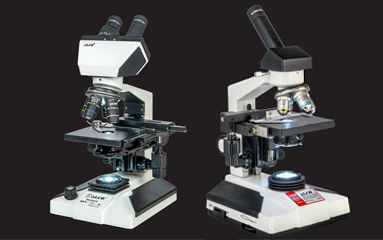
When schools ask us what microscope to buy, they almost always start with magnification. It is the least useful number to lead with. What actually decides whether a class of forty students can see the slide is the quality of the objective, the illumination system, and the mechanical stage.
Achromatic objectives correct for two colours of light and are the minimum for teaching use. Below that, chromatic aberration blurs edges and students lose confidence in what they are looking at. Above achromatic sits semi-plan and plan-achromatic optics — worth the premium for higher-year students learning to draw specimens.
LED illumination has replaced tungsten in almost every teaching scope. It runs cooler, lasts longer, and does not shift colour temperature as the bulb ages. Look for illumination with a high-low control so students can dim the light for stained slides.
Finally: a mechanical stage transforms a first-year microscope from frustration into a working instrument. Slides stay put, students can search efficiently, and the teacher can walk between benches without re-centring specimens.